


Closed office
What is a Closed Office?
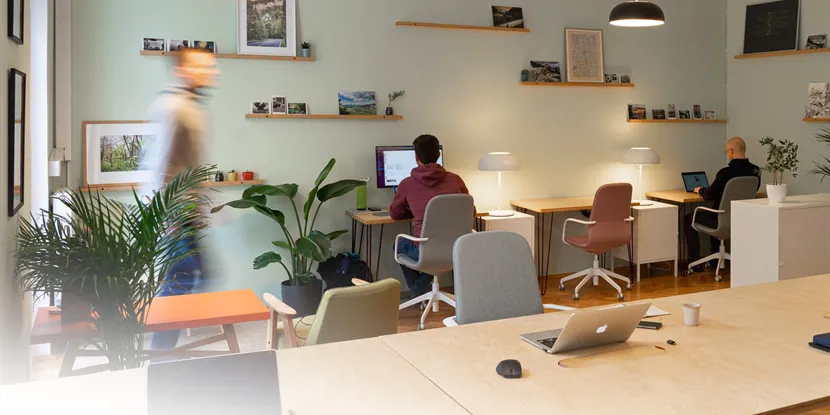
In the world of shared office buildings, the "closed office" concept stands out. Unlike the open spaces that dominate many modern work environments, a closed office refers to individual rooms within a shared space that a company can rent exclusively. It's a nod to traditional office setups, offering employees a secluded environment where they can shut the door and immerse themselves in their work.
How Does It Fit in a Shared Office Building?
Shared office buildings often blend various workspace designs. While they feature open areas designed to foster collaboration and interaction, they also incorporate closed offices. In these open areas, employees from different companies can pick a desk, promoting a sense of community and flexibility. But for those moments when privacy or focused teamwork is paramount, closed offices come into play.
Why Opt for a Closed Office?
Closed offices cater to companies that put a premium on privacy, confidentiality, or specific team dynamics. Imagine a startup working on a groundbreaking product prototype or a legal team discussing sensitive client information. In such scenarios, the ability to retreat to a private space is invaluable. Closed offices offer this sanctuary, allowing teams to conduct meetings, work on confidential projects, or simply provide a quiet space for employees.
In Conclusion...
The closed office is a testament to the fact that while open-plan designs have their merits, there's still a demand for traditional, private workspaces. In shared office buildings, the blend of open and closed spaces offers companies the best of both worlds: the vibrancy of a communal workspace and the privacy of a dedicated office. As the nature of work continues to evolve, spaces like the closed office ensure that diverse work needs are catered to.
- → What is a Closed Office?
- → How Does It Fit in a Shared Office Building?
- → Why Opt for a Closed Office?
- → In Conclusion...
- Adjustable-Rate Mortgage (ARM)
- Amortization
- Annual operating expenses
- Annual Percentage Rate (APR)
- Annual rent incl. Operation
- Annuity
- Appreciation
- Arbitration
- As-Is Condition
- Asbestos
- Bankruptcy
- Bidding War
- Bilateral Contract
- Blanket Insurance Policy
- Bona Fide
- Borough
- Breach of Contract
- Breach of Warranty
- Brokerage
- Built-up area
- Business rates
- Buyer's Market
- Cap Rate
- Capital Gains
- Cash price
- Certificate of Deposit (CD)
- Clinic
- Closed office
- Collateral
- Commercial area
- Commercial Property
- Commercial property value
- Commercial real estate
- Commission
- Comparative Market Analysis
- Cost-determined rent
- Covenant
- Coworking space
- Credit
- Damage & Destruction (In a Lease)
- Days on the market
- Debt
- Deposit
- Depreciation
- Down Payment
- Duplex
- Energy label
- Environmental Impact Statement
- Eviction
- External valuer
- Fiduciary Duty
- Fixed-Rate Mortgage
- Gross Income
- Gross Lease
- Gross Up
- Ground Lease
- Ground rent
- Industrial property
- Inflation
- Interest Rate
- Investment
- Investment Property
- Investor
- Lease
- Lease Buyout
- Lease Option
- Letter of Intent
- Market rent
- Mediation
- Mortgage
- Mortgage Broker
- Multi-user property
- Net yield
- Office Community
- Office Hotel
- Office Space
- Open House
- Open Space
- Operating Expenses
- Oral Agreement
- Potential Rental Income
- Production facilities
- Project property
- Property Company
- Property Manager
- Property Tax
- Proposal To Lease
- Real Estate Agent
- Real Estate Broker
- Realtor
- Rental Income
- rental period
- Repossession
- Restaurant
- Restructured Loan
- Retail
- Return
- Security deposit
- Service charge
- Shared Office
- Shop
- Showroom
- Square meter price
- Storage
- Store
- Sublease
- Tax deduction
- Tenant Improvement Allowance
- Tendering price
- Virtual office
- Warehouse
- Year of construction
- Yearly rent